Drone Show Programming: Software & Technical Process 2026
Story
Drone show programming is the process of converting a creative storyboard into synchronised flight paths for each drone in the formation, using specialised software such as SkyMagic, Verge Aero or Drone Show Software. Unlike programming a single drone, formation programming has to solve the problem of collision avoidance among hundreds of flying devices only a few metres apart in the dark of night. In this article, Drone Xuân Air, which has an in-house team of drone show programming engineers, explains the concept, the popular software, the 4-step process and the skill requirements of this profession, which is still very new in Vietnam.
1. What Is Drone Show Programming?
Understanding the true nature of programming work is the foundation for assessing the quality of a drone show provider. This section defines the concept, distinguishes it from single-drone programming and clarifies the programmer's role in the project as a whole.
1.1. Definition of drone show formation programming
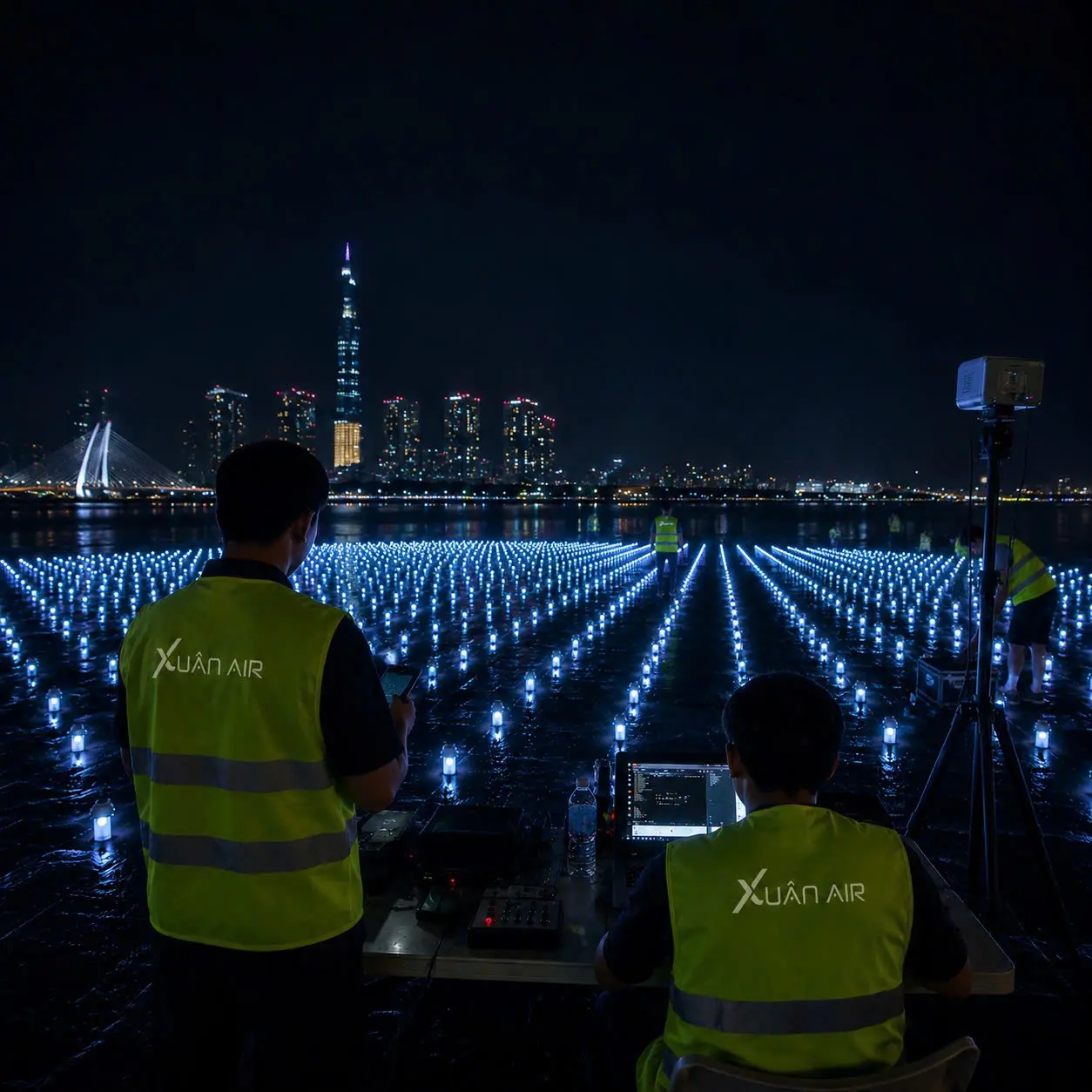
Drone show programming is the design and encoding of flight paths, timing and LED colours for the entire drone formation, so that hundreds of devices together form a unified moving image in the sky. Each drone works like a "flying pixel": the software specifies which coordinates it is at, at which second and in what colour it lights up, and all this data is transmitted to the drone by radio signal from the ground control station before and during the show.
1.2. How it differs from single-drone programming
Programming one drone (a filming drone, for example) focuses on real-time control of one device; drone show programming is a "swarm" problem: hundreds of drones fly along predetermined routes, with no camera and no autonomous decision-making. The greatest challenge is collision avoidance: the algorithm must ensure that no two flight paths intersect at the same moment, even during complex transition phases when the whole formation restructures.
1.3. The programmer's role in a drone show project
The programmer is the bridge between the creative team and the flight team: receiving the storyboard from the scriptwriter, assessing feasibility (whether there are enough drones to draw the image, whether the transitions can be made in time), building the animation, exporting the flight file and supporting calibration on site. According to VnExpress, a complete performance requires the combination of engineers, designers, 3D animators and technicians, among whom the programmer bears final responsibility for flight path safety.
2. Top Popular Drone Show Programming Software Today
The software market divides into two groups: commercial solutions integrated with hardware and open-source platforms for research. The choice of software determines the limits of the show's scale and smoothness.
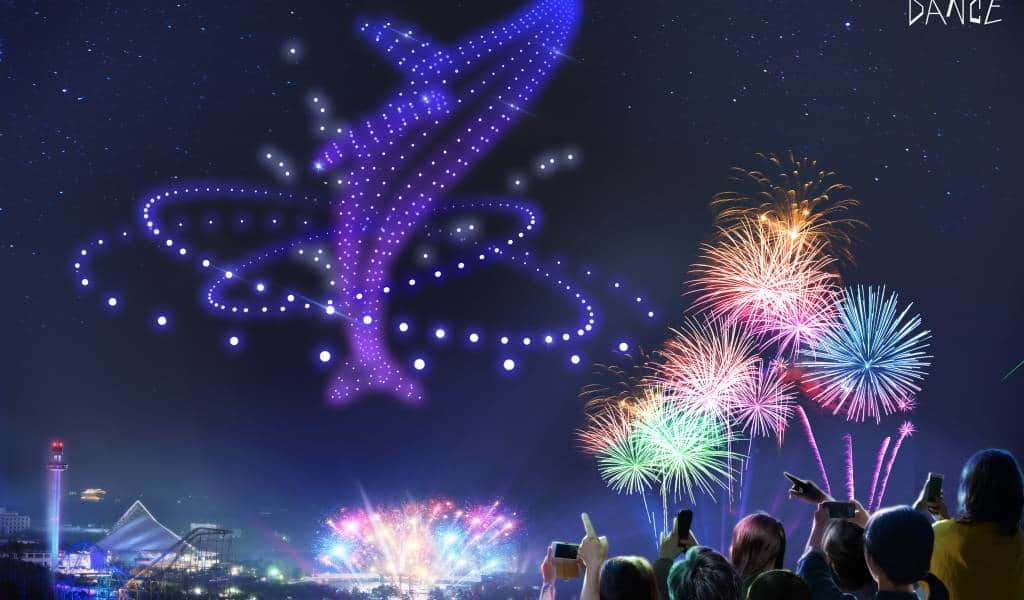
2.1. SkyMagic, Verge Aero and Drone Show Software
The three most popular commercial names: SkyMagic (the company behind many major international shows such as the ADIPEC Gala), Verge Aero (an integrated design – simulation – operation ecosystem, widely used by Intel and other pioneering companies) and Drone Show Software from SPH Engineering, whose version 5.1 (2025) adds time code, improved flight logic and safety features for pyro drone shows. For the visual design stage, studios usually build the animation in Houdini, Blender or Cinema 4D and then convert it into coordinate – time – colour data for each drone, according to Cyberdrone's description of the process in VnExpress.
2.2. Open-source software: Skybrush, Crazyflie
The open-source group suits research and small-scale shows: Skybrush (a complete show design + simulation toolkit, used by technical professionals to check for logic errors before flying) and the Crazyflie/ROS ecosystem for indoor mini drones. The advantages are zero cost and deep customisation; the disadvantages are the lack of official support and limits on stability beyond a few hundred devices.
2.3. Comparison of features and scale limits
Software | Type | Suitable scale | Strengths |
|---|---|---|---|
SkyMagic | Commercial | 500–10,000+ | Mega shows, pyro integration |
Verge Aero | Commercial | 100–1,000+ | All-in-one ecosystem, easy to operate |
Drone Show Software (SPH) | Commercial | 100–2,000+ | Time code, pyro safety, powerful simulation |
Skybrush | Open source | 10–300 | Free, good at checking logic errors |
Crazyflie/ROS | Open source | 10–100 (indoor) | Research, indoor shows |
3. The Process of Programming a Drone Show from A to Z
From idea to finished flight file, the standard programming process comprises 4 steps and can take from a few weeks to a few months depending on scale. This is the process the Xuân Air engineering team applies to every project, from 100-drone to 700-drone shows.
Concept and storyboard: the scriptwriter builds the scene timeline: which image appears at which minute, how the transitions work, and how they match the background music
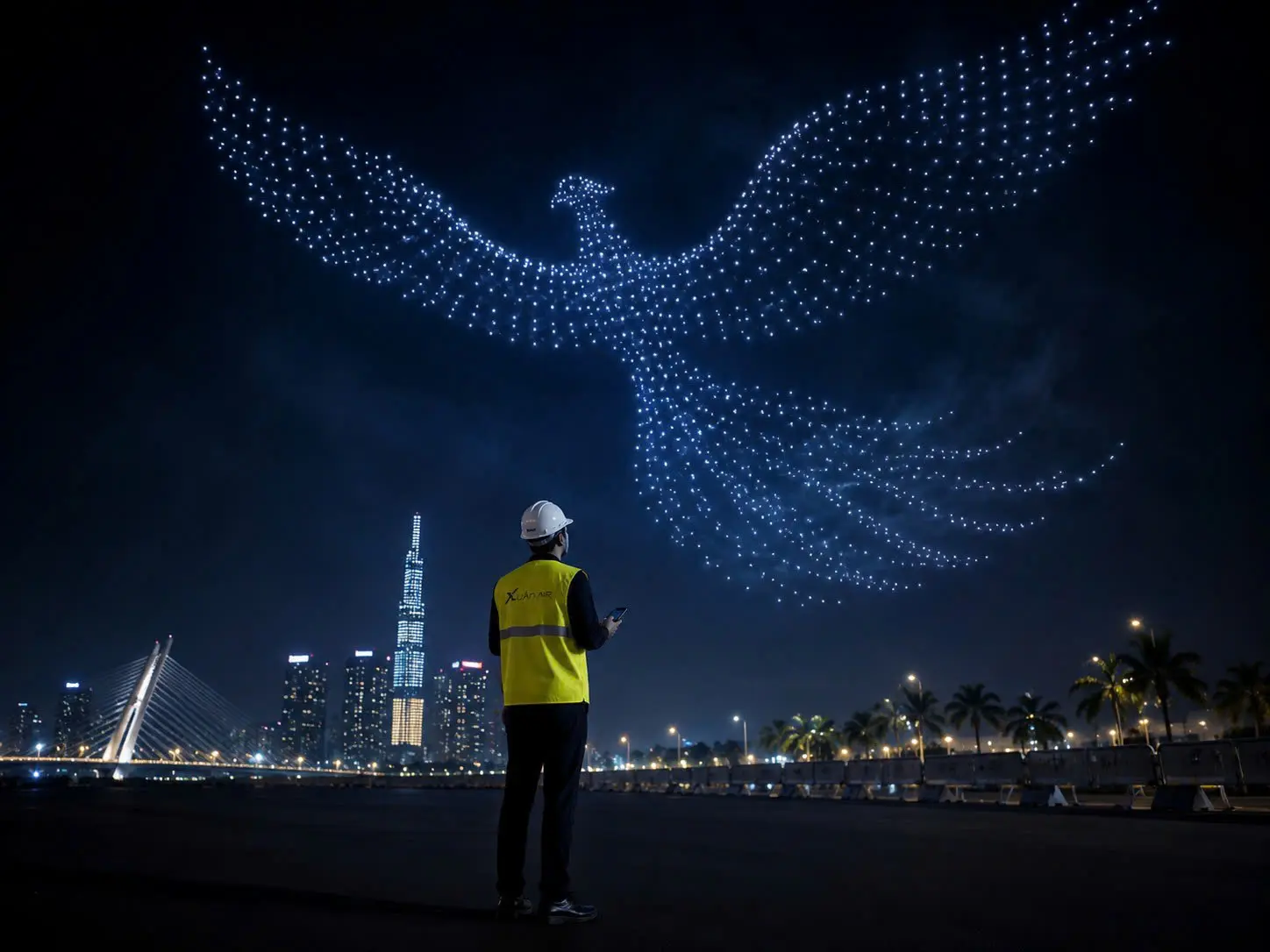
3D formation design in software: the 3D artist builds each image (logo, mascot, text) as a point cloud; each point is one drone position, and the number of drones determines the level of image detail
Simulation testing and flight path optimisation: the entire show is run in simulation to detect collision risks and to optimise flight distances to save battery; this is the step that decides safety: the mass drone-fall incidents in Perth (Australia) in 2022 and Guangdong (China) in 2023 show the price of cursory testing
Music synchronisation, light cues and flight file export: each scene is matched to the beat of the music, LED colours are specified by time frame, and the flight file is exported and loaded onto each drone via the control station
On the show night, the RTK (Real-Time Kinematic) system from the ground station continuously corrects the position of each drone in real time, the technology that helped Xuân Air's 700-drone Cần Thơ show hold its formation precisely even when the wind on the Hậu River reached force 4.
4. Skill Requirements and Programming Time for a Show
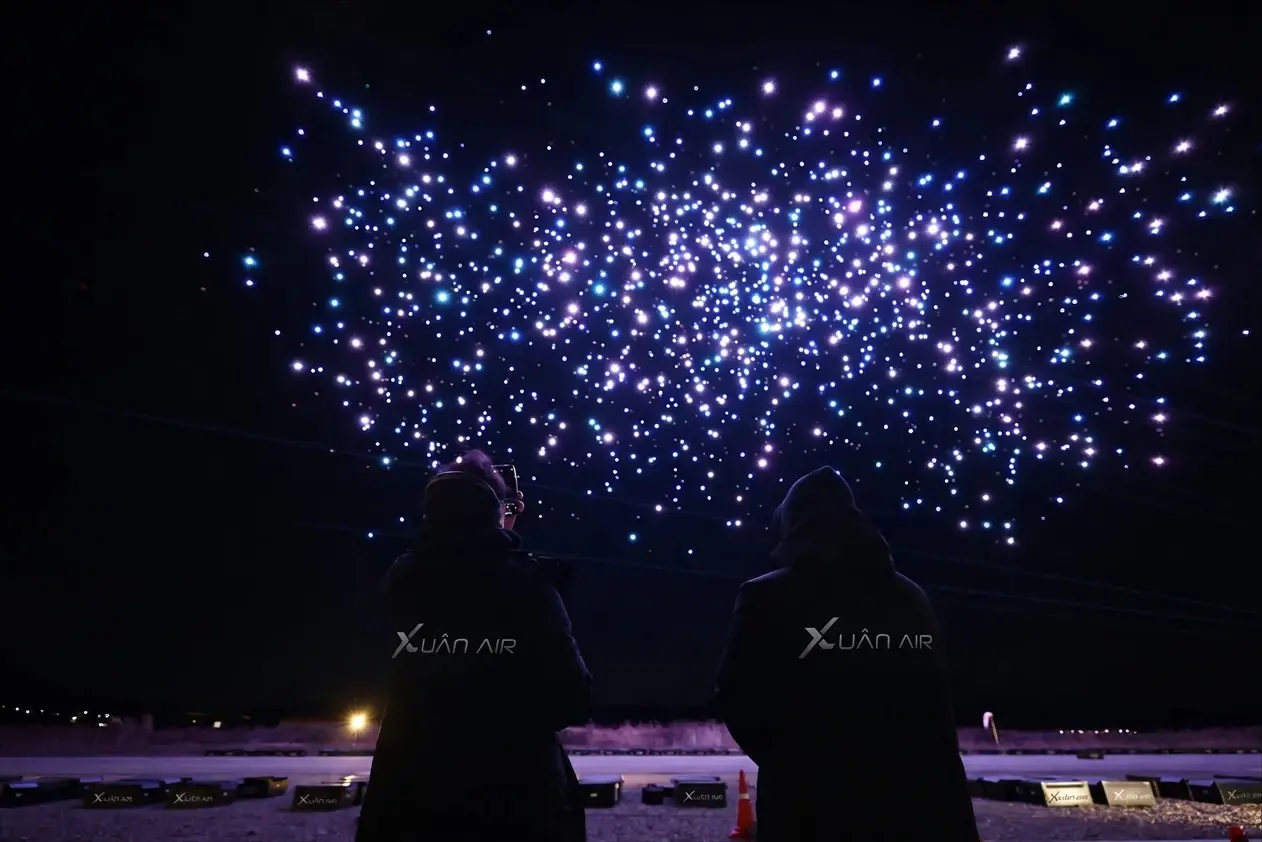
The profession of drone show programming demands a rare combination of skills: 3D spatial geometric thinking, proficiency in animation tools (Blender/Houdini), an understanding of flight principles and the physical limits of drones (speed, battery, wind), and the ability to coordinate with scriptwriters and pilots. In terms of time, a 100-drone show with 5–7 scenes needs around 2–3 weeks of programming and simulation; a 500-drone show with a complex storyboard needs 4–6 weeks, not counting the storyboard approval phase and on-site test flights. According to Xuân Air's 2025–2026 delivery data, collision-avoidance and transition optimisation accounts for nearly half of total programming time, more than the image-building stage itself, and is the factor that distinguishes a "smooth" show from a "jerky" one.
5. Frequently Asked Questions About Drone Show Programming
Common queries from people learning about the technology and corporate clients who want to assess a provider's capability.
What should you study to become a drone show programmer?
A suitable foundation includes: 3D graphics/animation (Blender, Cinema 4D), basic programming (Python is commonly used in flight data processing pipelines) and knowledge of UAVs. People from motion graphics or aeronautical engineering backgrounds both have a way into this profession.
Is a drone in the show "smart" enough to avoid collisions by itself?
No. Performance drones only fly to their pre-programmed coordinates and light up in the choreographed colour; every collision-avoidance solution has already been resolved at the simulation stage before the show. On the show night, the ground station monitors and can cut the connection to any individual device in an emergency.
Why is it necessary to run a simulation before the real flight?
Simulation detects flight path logic errors that the naked eye cannot see: two drones crossing at the second of a transition, a flight distance exceeding battery capacity, or the formation crossing the boundary of the permitted zone. Skipping this step is the main cause of the mass drone-fall incidents that have occurred around the world.
How does programming a 500-drone show differ from a 100-drone show?
It differs in level of complexity, not just in number: flight path density is many times greater, making the collision-avoidance problem exponentially harder; more detailed images require fine-tuning of each cluster of drones; and simulation and testing time increases from 2–3 weeks to 4–6 weeks.
Can you teach yourself the software and organise a drone show?
Technically, you can start with Skybrush and mini drones to learn the principles. But organising a commercial show in Vietnam requires flight permits from the Civil Aviation Authority of Vietnam and the Ministry of National Defence, specialised equipment and a trained operating crew, so real-world events all need a professional provider.
How is the background music synchronised with the drones?
The software assigns light cues and movements according to the timecode of the music: each important beat corresponds to an effect (a colour change, an image burst, a transition). On the show night, the music playback system and the control station run on a shared clock so that image and music match second by second.
6. Xuân Air In-House Drone Show Programming Engineering Team
Unlike the model of outsourcing the programming stage, Xuân Air has its own in-house team of programming engineers and 3D artists, allowing full control from storyboard to flight file, storyboard adjustments close to the show date and calibration handled right on site. This capability has been verified through the 500-drone Gia Lai, 700-drone Cần Thơ and 400-drone Đại Nam projects and the 100-drone SHB brand show; see details at completed drone show projects and the Xuân Air team.
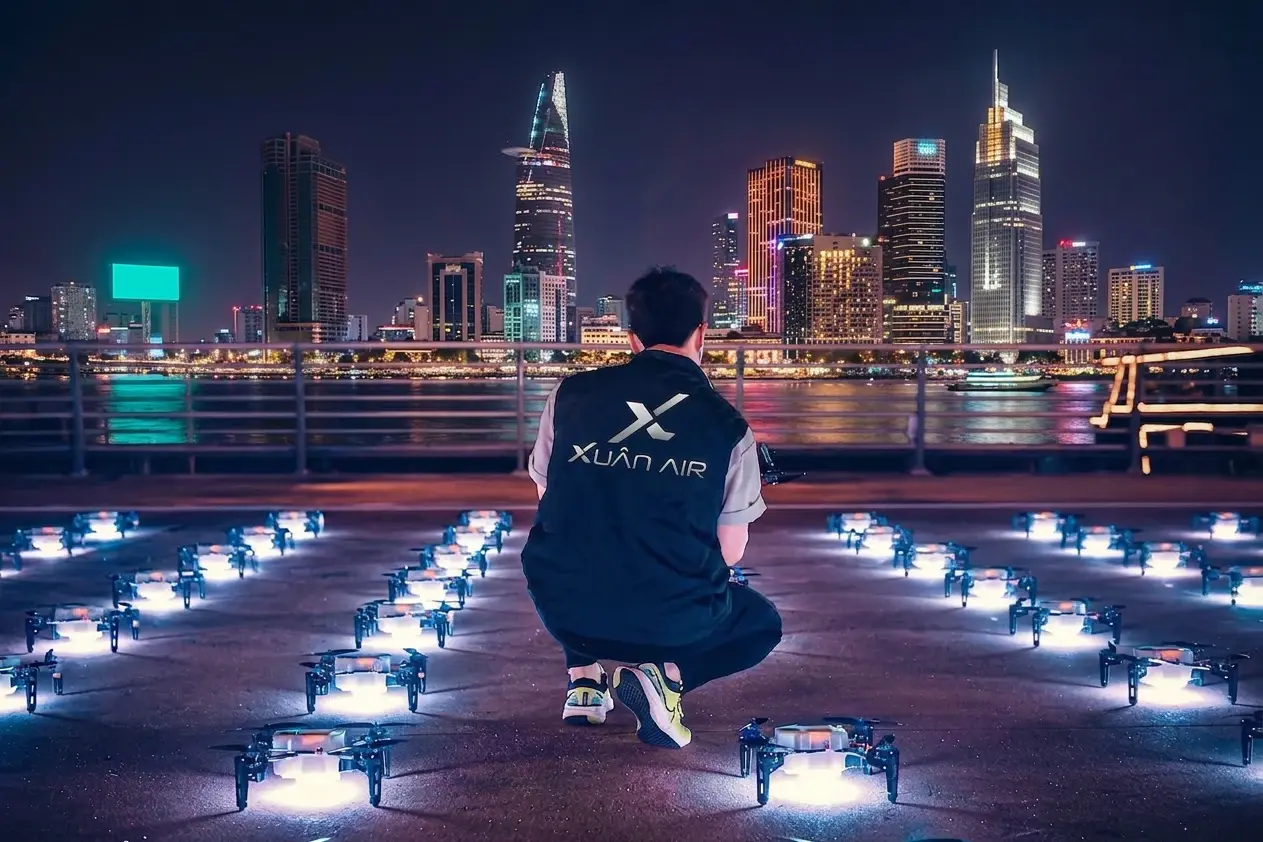
Drone show programming is the technical heart of every performance: from storyboard, 3D formation design and collision-avoidance simulation to music synchronisation, each step determines whether the show is smooth, beautiful and safe. For those exploring the profession, this is a rare field where art and engineering intersect; for businesses hiring a show, in-house programming capability is the most important criterion when choosing a provider. Xuân Air is proud to be one of the few companies in Vietnam to have full mastery of this process.
Contact us for a free consultation + demo 3D simulation:
Hotline: +84 969 045 871
Email: trung@xuanair.com
Website: xuanair.com/contact
Contact Us
Discover Custom Outdoor, Indoor, and Residential Solutions for Your Needs